Instruments of Blindness: When the Tools of Discovery Become the Walls of a Cage
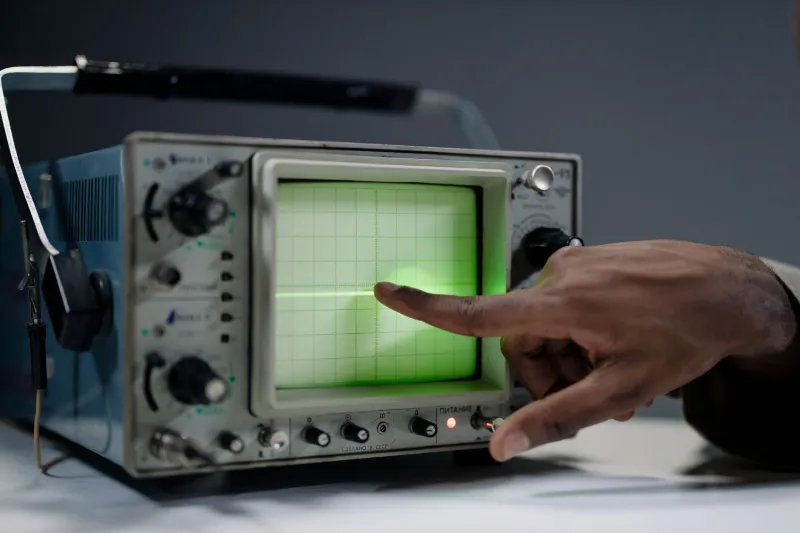
There is a peculiar irony embedded in the practice of modern science. The more sophisticated our measurement apparatus becomes, the more confidently we describe reality — and yet the more thoroughly we may be describing only the slice of reality our instruments were designed to see. This is not a new philosophical worry. It is, increasingly, an empirical one.
The problem is structural. A measurement system is not a neutral window onto the world. It is a set of choices — about what variables matter, what scales are appropriate, what counts as signal versus noise. When those choices are made well, the system illuminates. When they calcify into unexamined defaults, the system begins to function less like a lens and more like a mirror, reflecting back the assumptions that were poured into it at the design stage.
The feedback loop this creates is subtle but consequential. Data generated by a given framework tends to validate the framework, because the framework defined what data was worth collecting in the first place. Anomalies that fall outside the measurement architecture either go unrecorded or get reclassified as noise. Over time, the infrastructure of a scientific discipline — its journals, its grant mechanisms, its training pipelines — aligns itself with the dominant measurement paradigm, making departure from that paradigm progressively more costly.
Climate Modeling and the Grid Problem
Consider the case of climate science, one of the most computationally intensive modeling enterprises in human history. Global climate models divide the Earth's atmosphere, oceans, and land surface into three-dimensional grids. The resolution of those grids — how small each cell is — determines what physical processes can be represented directly and which must be approximated through parameterization schemes.
For decades, computational constraints forced modelers to work with relatively coarse grids, meaning that phenomena smaller than roughly 100 kilometers had to be statistically estimated rather than explicitly simulated. Cloud microphysics, convective systems, ocean eddies — all of these fell below the resolution threshold and were handled through parameterizations that were themselves calibrated against historical observations.
The feedback loop here is not trivial. The parameterizations were tuned to reproduce the climate of the past. When the models were then used to project future climates under novel forcing conditions, the parameterizations carried with them assumptions derived from a world that no longer existed. Uncertainties in cloud feedbacks — which remain among the largest sources of spread in climate sensitivity estimates — are partly a legacy of this architecture. The measurement and modeling framework was built to reproduce what had been observed, and in doing so, it encoded limits on what could be projected.
More recent high-resolution models are beginning to resolve some of these processes explicitly, and the results are not always consistent with what the parameterized versions predicted. The framework, in other words, was not merely simplifying reality. It was, in some domains, misrepresenting it.
The DSM and the Cartography of Mental Illness
The Diagnostic and Statistical Manual of Mental Disorders — the DSM — represents perhaps the most consequential self-referential measurement system in behavioral science. First published in 1952 and now in its fifth edition, the DSM provides the categorical framework through which American psychiatry diagnoses, treats, insures, and researches mental illness.
The manual's categories are not derived from biological assays or neuroimaging signatures. They are consensus constructs, assembled from symptom clusters that clinicians agreed tended to co-occur. This is not a criticism of the clinicians who built them — at the time, it was the most rigorous approach available. The problem is what happened next.
Research funding flowed toward DSM categories. Drug trials were organized around them. Epidemiological datasets were structured to capture them. Graduate students learned to think about psychopathology through their lens. Over several decades, the categories became so deeply embedded in the infrastructure of psychiatric research that they began to function as though they were natural kinds — as though depression, schizophrenia, and generalized anxiety disorder were discrete entities waiting to be discovered, rather than administrative conveniences that had been promoted to ontological status.
The National Institute of Mental Health's Research Domain Criteria initiative, launched in 2010, was an explicit acknowledgment that this feedback loop had become a scientific liability. The RDoC framework proposed organizing research around dimensions of observable behavior and neurobiological function that cut across DSM categories. The motivation was straightforward: decades of research organized around DSM constructs had produced remarkably few insights into the biological mechanisms of mental illness, partly because the constructs themselves may not map onto coherent biological entities.
The DSM did not merely describe the landscape of mental illness. It shaped the landscape of what psychiatric science was capable of asking.
Genomics and the Variant Visibility Problem
The history of genome-wide association studies offers a third illustration. GWAS research scans hundreds of thousands of genetic variants across large populations, correlating statistical patterns of variation with phenotypic outcomes. The approach has been enormously productive, identifying thousands of loci associated with traits ranging from height to schizophrenia to cardiovascular disease.
But the architecture of GWAS encodes assumptions. The standard approach tests common variants — those present in at least one to five percent of the population — because rare variants were historically difficult to genotype reliably at scale, and because statistical power for rare-variant associations requires sample sizes that were long impractical. The consequence is that GWAS, for much of its history, was systematically blind to the genetic architecture of rare variants, structural variants, and gene-environment interactions that do not manifest in the single-nucleotide polymorphism framework the technology was built to interrogate.
The famous "missing heritability" problem — the observation that identified common variants explain only a fraction of the heritability estimated from twin studies — is at least partly an artifact of this architectural constraint. The framework measured what it could measure, and then researchers were left puzzling over why the measurements fell short of what other methods suggested should be there.
The Meta-Problem
What unites these cases is not incompetence or bad faith. The researchers who built these systems were doing exactly what good scientists do: constructing rigorous, reproducible methods for extracting knowledge from complex systems. The feedback loop problem is not a failure of individual scientists. It is a structural feature of how measurement frameworks interact with the institutions that grow up around them.
The deeper philosophical challenge is epistemological. A measurement system can only validate or invalidate hypotheses that are expressible in its own terms. It has no mechanism for detecting phenomena that fall entirely outside its conceptual vocabulary. The things it cannot see are, by definition, absent from its outputs — and absent outputs generate no pressure to revise the framework.
This is where the problem becomes self-sealing. The framework produces data. The data is interpreted as evidence about the world. The evidence is used to refine the framework. Nowhere in this cycle is there a natural entry point for the recognition that the framework itself might be the limiting factor.
Breaking such loops typically requires either an anomaly too large to be reclassified as noise — a result so inconsistent with the framework's predictions that the framework itself becomes the object of scrutiny — or a deliberate methodological pluralism that runs competing frameworks in parallel and treats their divergences as informative rather than inconvenient.
The latter is harder to institutionalize than it sounds. It requires funding bodies willing to support approaches that may not yet have the evidentiary track record of established paradigms. It requires journals willing to publish results that challenge the frameworks their review processes were built to evaluate. And it requires scientists willing to invest careers in methods that the existing infrastructure was not designed to reward.
These are not merely scientific problems. They are problems about the sociology of knowledge — about how institutions either enable or foreclose the capacity to see what they were built to find. The instruments we construct to study reality are also, inevitably, instruments that constrain it. Recognizing that constraint is not a counsel of despair. It is the precondition for building something better.