The Cage Effect: When the Laboratory Itself Becomes the Experiment
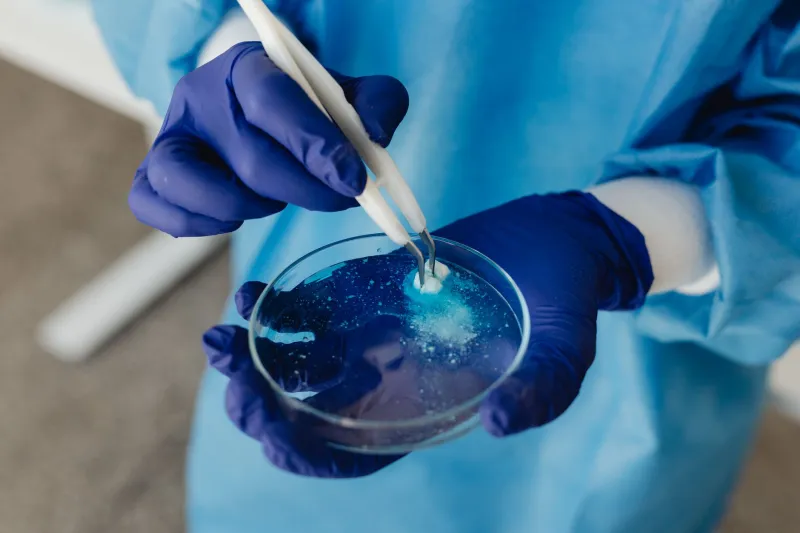
Science's great promise has always been control. Strip away the noise of the natural world, isolate the variable of interest, and measure with precision. The laboratory is the instrument through which that promise is kept—a sealed chamber where ambiguity goes to die. Yet a quiet but persistent line of inquiry is challenging the foundational assumption beneath this promise: that the act of controlling a biological system leaves the system itself unchanged.
The evidence, drawn from multiple disciplines, increasingly suggests otherwise.
The Observer Problem Isn't Only Quantum
Most scientifically literate Americans are familiar with the observer effect in quantum mechanics—the idea that measurement unavoidably perturbs the system being measured. What receives far less attention is how thoroughly this principle applies to biological research conducted in conventional laboratory settings.
Consider the seemingly mundane conditions of a standard neuroscience experiment. Rodents used in memory and stress research are typically housed in plastic cages under artificial lighting that cycles on a fixed 12-hour schedule, fed standardized chow, and maintained at a constant temperature of roughly 72 degrees Fahrenheit. Researchers enter at predictable intervals. Background noise is minimized. The environment is, by design, relentlessly uniform.
This uniformity is not neutral. Hippocampal neurogenesis—the birth of new neurons in a brain region central to learning and memory—has been shown to respond sensitively to environmental enrichment. Animals housed in standard laboratory conditions exhibit measurably lower rates of neurogenesis compared to those given access to complex, variable environments. When researchers subsequently measure cognitive performance or stress hormone profiles in laboratory animals and extrapolate to broader claims about mammalian neurobiology, they are measuring a brain that the laboratory has already altered.
The question this raises is not merely methodological. It is philosophical: what exactly is being studied?
Microbiology's Invisible Scaffold
The problem takes a different but equally troubling shape in microbiology. For over a century, the foundational technique for studying bacteria has been culturing them in isolation—growing single species on nutrient-rich agar plates or in liquid broth. The logic is sound: remove the complexity of the natural microbial community, and the behavior of any one organism becomes legible.
But bacteria, it turns out, are not legible in isolation. They communicate through a mechanism called quorum sensing, releasing and detecting molecular signals that allow them to assess population density and coordinate behavior accordingly. Biofilm formation, toxin production, antibiotic resistance expression—all of these are regulated, at least in part, by the chemical conversations bacteria conduct with their neighbors.
In the sterile silence of a monoculture flask, those conversations do not occur. The organism being studied is, in a meaningful sense, a different organism than the one present in a human gut, a soil sample, or a wound. Studies of antibiotic efficacy conducted in isolated cultures have repeatedly shown reduced predictive power when applied to polymicrobial infections, precisely because the ecological context the laboratory removed was pharmacologically relevant.
The scaffold of the natural environment was not merely background. It was part of the phenomenon.
When Animals Escape the Protocol
Behavioral ecology offers perhaps the most dramatic examples of laboratory-induced distortion, because it is the field in which researchers have most systematically followed their findings into the field—and watched them collapse.
For decades, studies of foraging behavior in birds and small mammals produced elegant mathematical models of optimal decision-making. Animals in controlled arenas appeared to allocate their energy with near-rational efficiency, trading off risk against reward in ways that satisfied theoretical predictions. The laboratory seemed to be revealing something deep about the cognitive architecture of non-human animals.
Then researchers began conducting parallel studies in natural habitats. The elegant optimization frequently disappeared. Animals made choices that looked irrational by laboratory standards—avoiding patches with high food density, ignoring apparently superior foraging routes, responding to social cues that had no analogue in the experimental arena. The controlled setting had not revealed how animals make decisions. It had revealed how animals make decisions when every variable that normally shapes those decisions has been removed.
Similar reversals have been documented in studies of animal communication, mating behavior, and predator avoidance. The laboratory, by eliminating confounds, had also eliminated the conditions under which the behavior in question was meaningful.
The Replication Crisis Has a Hidden Dimension
Much of the public conversation around science's replication crisis has focused on statistical practices—underpowered studies, p-value manipulation, publication bias toward positive results. These are genuine problems. But the laboratory contamination problem suggests a second, less-discussed dimension: even studies that replicate perfectly within laboratory settings may be replicating artifacts rather than natural phenomena.
This is a harder problem to solve, because it cannot be addressed by better statistics or larger sample sizes. It requires a more fundamental reckoning with what controlled conditions actually control for, and what they inadvertently produce.
Some researchers have begun advocating for what might be called ecologically embedded experimental design—approaches that deliberately introduce controlled amounts of environmental complexity rather than eliminating it entirely. Others argue for systematic field validation as a prerequisite for publishing laboratory findings in certain domains. Neither approach is without cost. Both sacrifice some degree of the precision that makes laboratory research tractable in the first place.
The Deeper Epistemological Wound
What the cage effect ultimately exposes is a tension at the heart of empirical biology. The laboratory is not a window onto nature. It is a translation of nature into a language that instruments can read—and like all translations, it introduces distortions of its own. Temperature-controlled rooms do not exist in the Appalachian forest. Fluorescent light cycles bear no relationship to the photoperiods that shaped mammalian circadian biology over millions of years. The researcher who enters the room at 9 a.m. every morning is, from the perspective of a stress-sensitive animal, a predictable threat.
None of this renders laboratory science invalid. The controlled experiment remains among the most powerful tools available for isolating causal relationships. But the assumption that control equals transparency—that a cleaner experimental environment yields a cleaner picture of biological reality—deserves sustained scrutiny.
The most honest position may be this: the laboratory reveals what organisms do under laboratory conditions. Whether that tells us what organisms do under any other conditions is a separate question, and one that the history of field research suggests we should answer with considerably more caution than the literature typically reflects.
The cage, it seems, has always been part of the data.