The Biology of Belief: How Expectation Rewires Neural Architecture
For much of the twentieth century, the placebo effect occupied an awkward corner of biomedical research — acknowledged as a nuisance variable, controlled for in trials, and rarely examined on its own terms. That posture has become increasingly difficult to sustain. A growing body of neuroimaging studies, randomized clinical trials, and molecular biology research now documents something considerably more provocative than a patient's hopeful misreporting: expectation, operating through identifiable neural pathways, can produce changes in brain structure, neurotransmitter output, and immune function that are objectively measurable and clinically meaningful.
This is not a story about self-deception. It is a story about mechanism.
The Neurochemical Footprint of Expectation
The most rigorously documented domain of placebo research involves pain. Studies using positron emission tomography have demonstrated that patients who receive an inert substance while being told it is a powerful analgesic show increased release of endogenous opioids — specifically mu-opioid receptor activation in regions including the anterior cingulate cortex, the prefrontal cortex, and the nucleus accumbens. These are not hypothetical changes inferred from self-report. They are quantifiable shifts in receptor binding potential, the same metric used to evaluate pharmaceutical opioids.
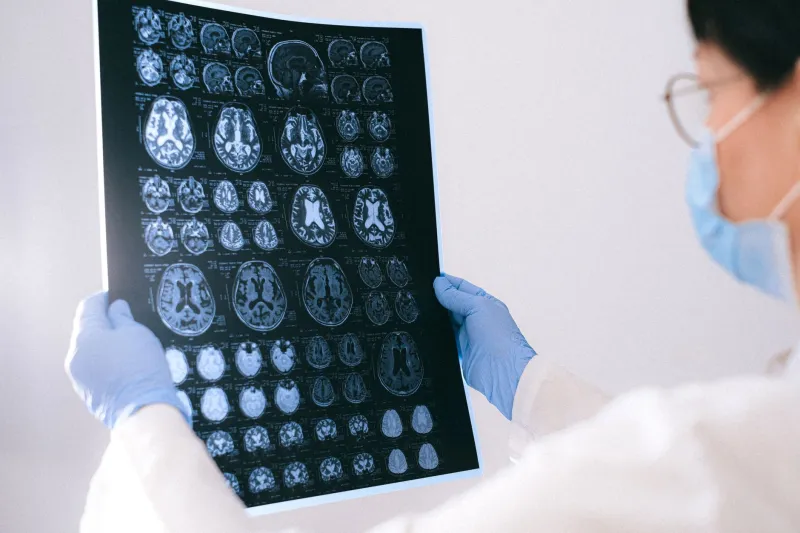
A landmark series of experiments conducted at the University of Michigan used PET imaging to map opioid release in real time during a standardized pain protocol. Participants who expected relief showed robust opioid activation; those primed to expect no effect showed substantially less, even when the physical stimulus was identical. The brain, it appeared, was writing its own prescription.
Functional MRI has extended this picture considerably. Research published in leading pain science journals has identified a placebo-responsive neural signature — a coordinated pattern of activity changes across the prefrontal cortex, insula, and thalamus — that predicts analgesic response with meaningful accuracy. Some investigators have proposed this signature as a potential biomarker, a neural fingerprint of expectation-driven modulation that operates independently of conscious reasoning.
Beyond Pain: Immune Function and Neurotransmitter Release
The reach of expectation-driven biology is not confined to pain circuits. Studies examining placebo responses in Parkinson's disease patients have documented dopamine release in the striatum following inert injections administered under the belief that they contained active medication. Given that Parkinson's involves the progressive depletion of dopaminergic neurons, the capacity of expectation to stimulate what remains of that system carries considerable clinical weight.
Perhaps more surprising is evidence touching the immune system. Research on conditioned immune responses — a related but distinct phenomenon — has shown that learned associations between neutral stimuli and immunosuppressive drugs can produce actual immunosuppression when the neutral stimulus is later presented alone. In human trials, patients conditioned in this way showed measurable reductions in immune markers that tracked those produced by the original drug. The immune system, long considered largely autonomous from conscious cognition, appears to respond to learned expectation in ways that challenge that assumption.
Clinical oncology provides another data point. Patients receiving chemotherapy who experience nausea in anticipation of their next treatment — before any drug is administered — are exhibiting a physiological response driven entirely by expectation and memory. The nausea is real; the vomiting is real; no chemical trigger is present. This anticipatory response involves genuine activation of the emetic reflex through cortical and brainstem pathways, not mere psychological distress.
The Open-Label Paradox
One of the more philosophically destabilizing findings in recent placebo research concerns open-label administration — giving patients placebos while explicitly telling them the pills contain no active ingredient. Conventional wisdom held that the placebo effect depended on deception: you had to believe you were receiving real treatment for the effect to materialize. A series of studies, including work from Harvard's Program in Placebo Studies, has complicated that assumption significantly.
In trials involving patients with irritable bowel syndrome and chronic lower back pain, open-label placebos produced statistically significant symptom improvement compared to no-treatment controls, even when participants were fully informed. The mechanism remains debated, but leading hypotheses involve the therapeutic ritual itself — the act of taking a pill, interacting with a clinician, and entering a care context — activating learned physiological responses that are largely automatic and not contingent on conscious belief in a specific substance.
This finding matters philosophically because it separates the placebo effect from simple credulity. The effect is not merely what happens when credulous people think they are being helped. It is, at least in part, what happens when the brain enters a state associated with healing — a state that can be triggered by context, relationship, and ritual as much as by belief in any particular agent.
Variability, Responders, and the Limits of the Data
Honesty requires acknowledging what the evidence does not yet establish. Placebo response rates vary enormously across conditions, populations, and study designs. Effect sizes in many domains are modest and frequently do not persist beyond the trial context. The same expectation-driven mechanisms that produce benefit can produce harm — nocebo effects, in which negative expectations generate measurable physiological deterioration, are documented with equal rigor.
There is also the persistent interpretive challenge of biological variability. Some researchers argue that what appears to be expectation-driven change is partly an artifact of regression to the mean — patients entering trials at peak symptom severity who would have improved regardless. Separating genuine placebo response from natural disease fluctuation requires careful methodological design, and not all studies in this field have met that standard.
The question of whether placebo effects are clinically exploitable at scale also remains open. The therapeutic context required to reliably elicit them is time-intensive and difficult to standardize. A healthcare system built on efficiency and throughput is poorly designed to cultivate the relational and ritualistic conditions under which these effects appear most robust.
What the Evidence Demands
Nevertheless, the accumulated data present a picture that cannot be responsibly dismissed. The brain does not passively receive and report biological states; it actively constructs them, and it does so in ways that are shaped by expectation, learning, and relational context. The boundary between psychological influence and biological reality is not a clean line. It is, as the neuroimaging data increasingly suggest, a continuous feedback architecture in which cognition and physiology are in constant negotiation.
For a site committed to evidence-based inquiry at science's frontiers, the placebo paradox is not a curiosity to be explained away. It is a signal demanding closer examination — one that sits at the intersection of neuroscience, immunology, and the oldest unresolved question in philosophy of mind: how does a state of the mind become a state of the body?