Rewriting Yesterday: The Laboratory Evidence That the Past Responds to Present Observation
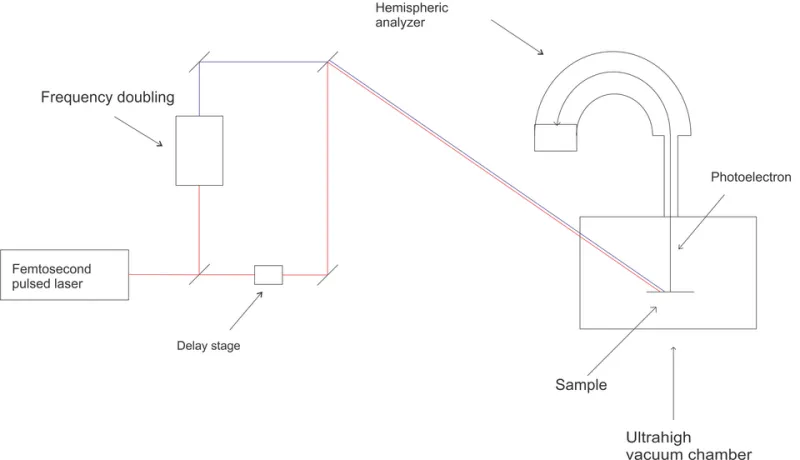
Photo: Byrank, CC BY-SA 4.0, via Wikimedia Commons
There is a particular kind of discomfort that quantum mechanics specializes in producing—not the vague unease of an unsolved mystery, but the sharper sensation of a foundational assumption being quietly removed from beneath you. Few results in modern physics generate that sensation more reliably than the family of experiments now grouped under the heading of delayed-choice quantum erasure. Their message, delivered with increasing precision over the past two decades, is this: under certain carefully controlled conditions, a measurement performed now can determine what a particle was doing in the past.
This is not metaphor. It is not philosophical extrapolation. It is, at this point, reproducible laboratory fact.
Wheeler's Original Provocation
The conceptual foundation was laid by physicist John Archibald Wheeler, who spent much of his career at Princeton and the University of Texas identifying the places where quantum mechanics most aggressively destabilizes classical intuition. In the late 1970s, Wheeler proposed a variation on the classic double-slit experiment designed to ask a pointed question: what if the experimenter waited until after a photon had passed through the slits before deciding whether to measure which path it took?
In ordinary double-slit experiments, the outcome is well established. When no detector monitors which slit a photon passes through, an interference pattern builds up on the back screen—evidence that the photon traveled as a wave through both slits simultaneously. When a detector is placed at one slit, the interference pattern vanishes, replaced by two distinct bands, as though the photon had made a definite choice and traveled as a particle through one slit only.
Wheeler's delayed-choice variant asked whether this behavior could be influenced retroactively. If the photon had already passed through the slits before the measurement apparatus was activated, had it already "decided" how to behave? His thought experiment predicted a deeply uncomfortable answer: no. The photon's past behavior—wave or particle—would be determined by the measurement choice made after the fact.
For years, this remained a thought experiment. Then physicists began building the apparatus.
From Thought to Laboratory
The first convincing experimental realizations appeared in the early 2000s, using beam splitters, optical fibers, and single-photon detectors arranged so that a photon's path became entangled with an ancillary "which-path" photon. By measuring or erasing the which-path information stored in the ancillary photon after the signal photon had already been detected, researchers could effectively determine, retroactively, whether the signal photon had exhibited wave-like or particle-like behavior.
The results matched the quantum mechanical predictions with uncomfortable precision. When the which-path information was preserved, no interference appeared. When it was erased—even after the signal photon's detection—interference fringes re-emerged in the correlated data. The past, in a very specific and measurable sense, had responded to a present choice.
A landmark 2007 experiment conducted by a French team at the Institut d'Optique tightened the controls considerably, closing several potential loopholes by using a quantum random number generator to make the delayed choice, ensuring no hidden classical signal could have traveled from the measurement apparatus back to the photon in time to influence its behavior through conventional means. The results held.
The 2022 Satellite Experiment and Its Implications
The most dramatic recent escalation of this work arrived in 2022, when a Chinese research group used the Micius quantum satellite to perform a delayed-choice experiment across a distance of roughly 1,200 kilometers. Entangled photon pairs were generated aboard the satellite and transmitted to ground stations separated by vast distances. The choice of measurement basis—effectively, whether to "look" at which path or to erase that information—was made at the ground stations after the photons had completed their journey through space.
The correlations observed were inconsistent with any local realistic model and consistent with quantum mechanical predictions to a high degree of statistical confidence. The experiment was notable not merely for its scale but for its closure of the so-called "locality loophole" at unprecedented distances. Whatever is happening between entangled particles when a measurement is made, it cannot be explained by any signal propagating through space at or below the speed of light.
This matters enormously for interpretations of the delayed-choice effect. One might be tempted to argue that some hidden variable, set at the moment of the photon's creation, determines its future behavior—that the past is fixed, and we are simply revealing what was always true. But Bell's theorem, and the experimental violations of Bell inequalities that have been confirmed repeatedly since Alain Aspect's foundational work in the 1980s, rule out precisely this class of explanations. The universe does not appear to be running a hidden script.
What the Evidence Actually Permits Us to Say
Physicists are careful—sometimes frustratingly so—about what language they apply to these results, and that caution is warranted. The delayed-choice quantum eraser does not permit signaling into the past. No information can be transmitted backward in time by manipulating the measurement apparatus, because the interference pattern only becomes visible when the delayed-choice data is correlated with the signal photon data after the fact. Causality, in the sense that prevents paradoxes, is preserved.
What the experiments do challenge is something subtler: the notion that the past has a definite, observer-independent ontological status before measurements are made. The Copenhagen interpretation, the most widely taught framework in American physics curricula, handles this by treating the wave function as a tool for calculating probabilities rather than a description of objective reality. Under this view, asking what the photon "really was" before measurement is simply not a well-formed question.
Alternative interpretations are less comfortable with this deflection. The many-worlds interpretation holds that all outcomes occur in branching parallel histories, which sidesteps retrocausality but introduces ontological extravagance of a different kind. Relational quantum mechanics, developed by physicist Carlo Rovelli, proposes that quantum states are always defined relative to a particular observer, making the "fixed past" a perspective-dependent rather than absolute notion.
A Frontier With No Clean Edge
What unites these interpretations—and what the experimental record now demands we take seriously—is the recognition that time, at the quantum scale, does not behave as our macroscopic experience suggests it should. The past is not a closed ledger. Under specific, reproducible conditions, it retains a kind of plasticity that yields to present observation.
This is not mysticism. It is the logical consequence of taking the mathematical formalism of quantum mechanics seriously, combined with the results of experiments that have been replicated across multiple continents and increasingly extreme parameter regimes. The photons do not lie.
For a culture accustomed to thinking of history as immutable and causation as strictly forward-flowing, the implications are genuinely disorienting. Physics has a long tradition of replacing comfortable assumptions with precise, uncomfortable truths. The fixed past may be the next assumption to go.